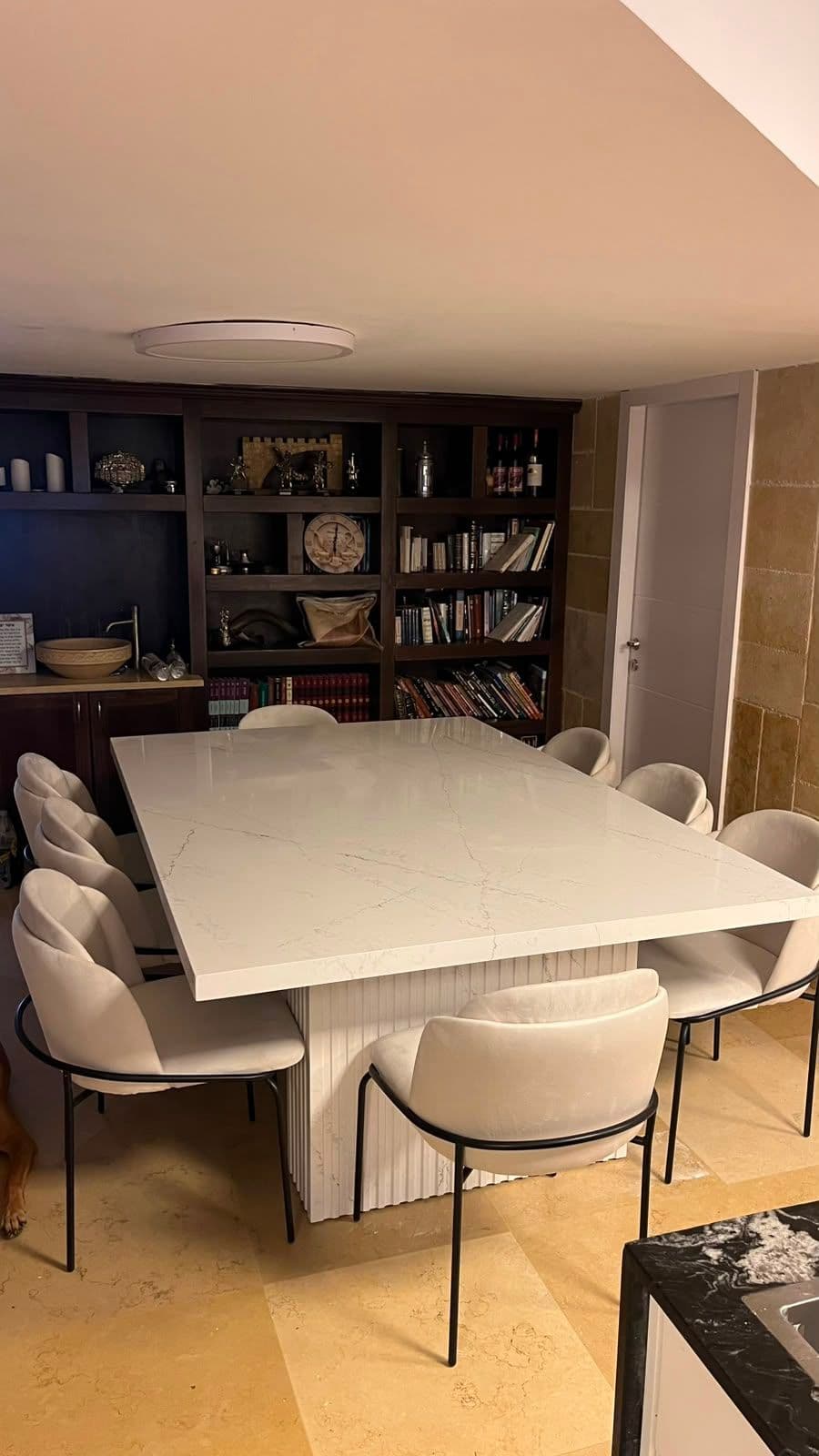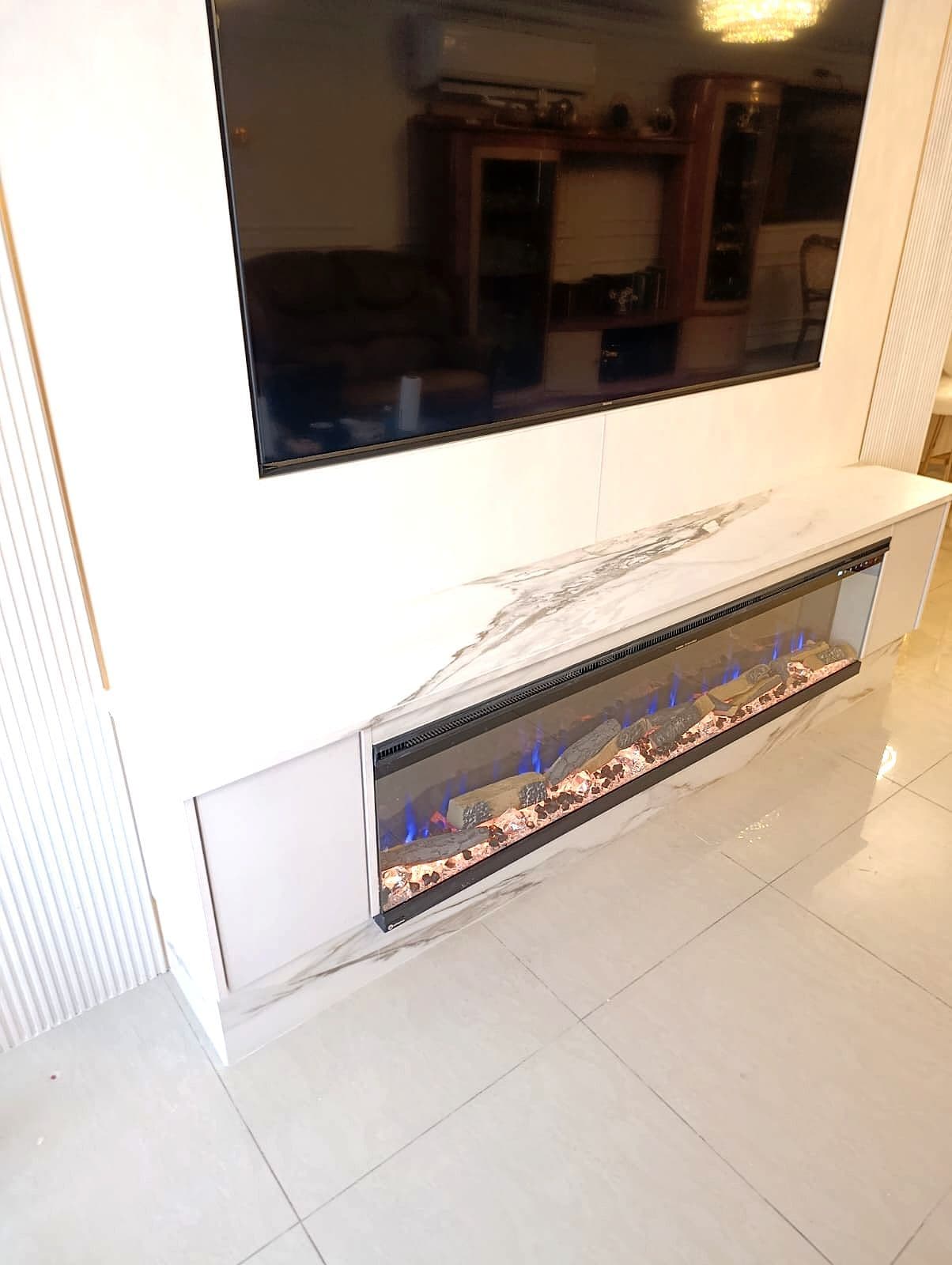
Sealing, daily cleaning, stain treatment and what to do once damage has happened. Everything you need to keep marble beautiful for twenty years.
Daily cleaning
Lukewarm water, a drop of pH-neutral soap and a microfibre cloth. That is all. You do not need expensive dedicated products, and above all avoid bleach, vinegar, limescale removers and anything labelled a 'heavy-duty degreaser' — they are all too acidic or too alkaline.
Wipe spills immediately. Not at the end of the meal — immediately. Most damage to natural marble comes from drops left sitting on the surface for long minutes, not from impacts or scratches.
Sealing: when and how often
A sealer is not a coating that sits on the stone but a material that penetrates the pores and fills them, so liquid cannot soak in before you wipe it. In an average domestic kitchen a sealer lasts 12–18 months.
A simple test: drop a little water on the surface and wait five minutes. If a dark patch appears and then fades once dry, the sealer has worn out and it is time to renew it. If the water stays beaded on the surface, the sealer is still working.
Stains versus etching — the difference
A stain is a substance absorbed into the stone that has coloured it — oil, wine, coffee. It is darker than its surroundings and can usually be drawn out with an absorbent poultice. Etching is surface damage from acid — it is lighter and duller than its surroundings, and it is not a stain but a change in texture.
Light etching can be removed by local polishing with a suitable polishing powder. Deep etching requires professional refinishing of the whole surface. We offer a refinishing service to our clients.