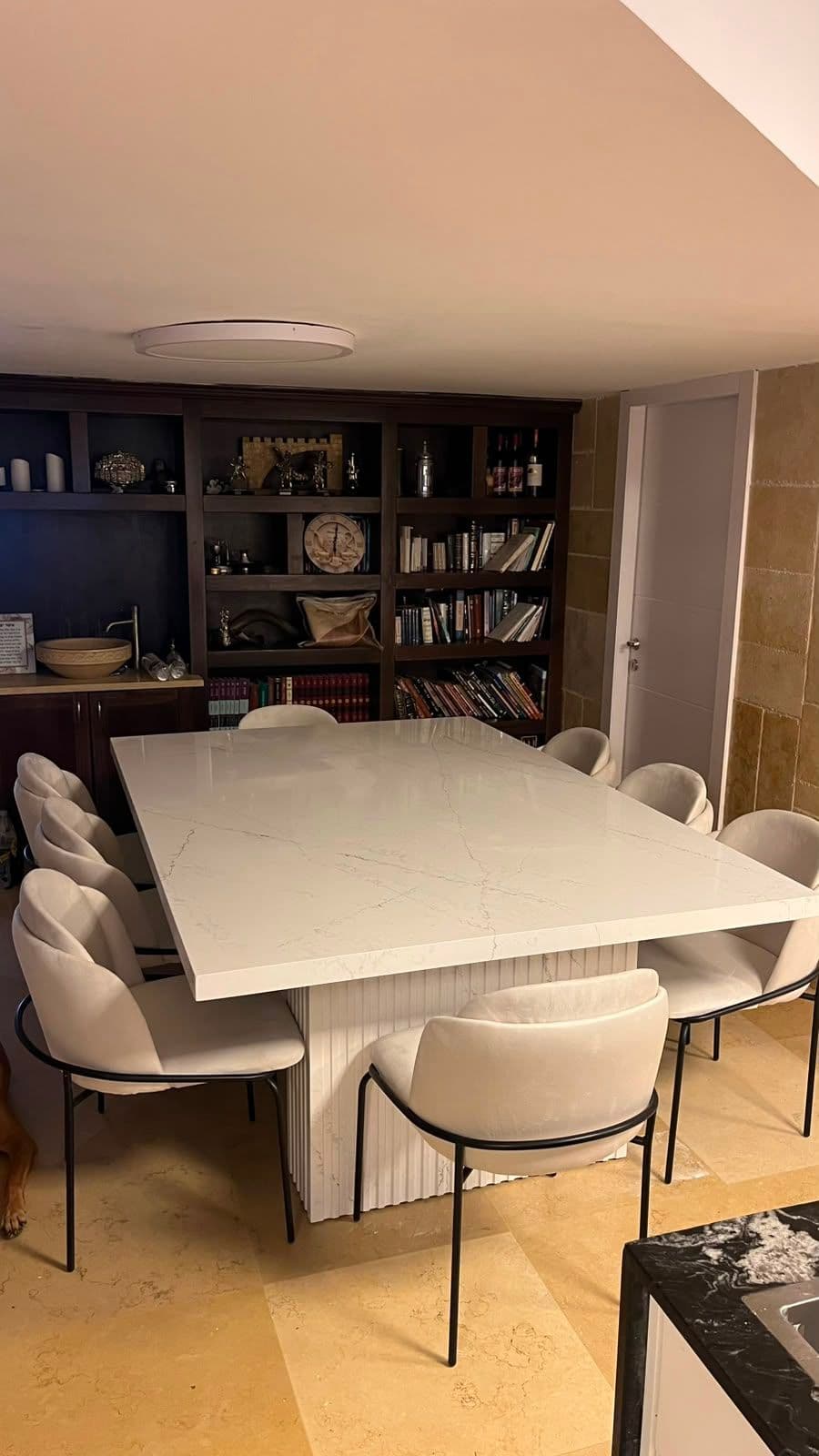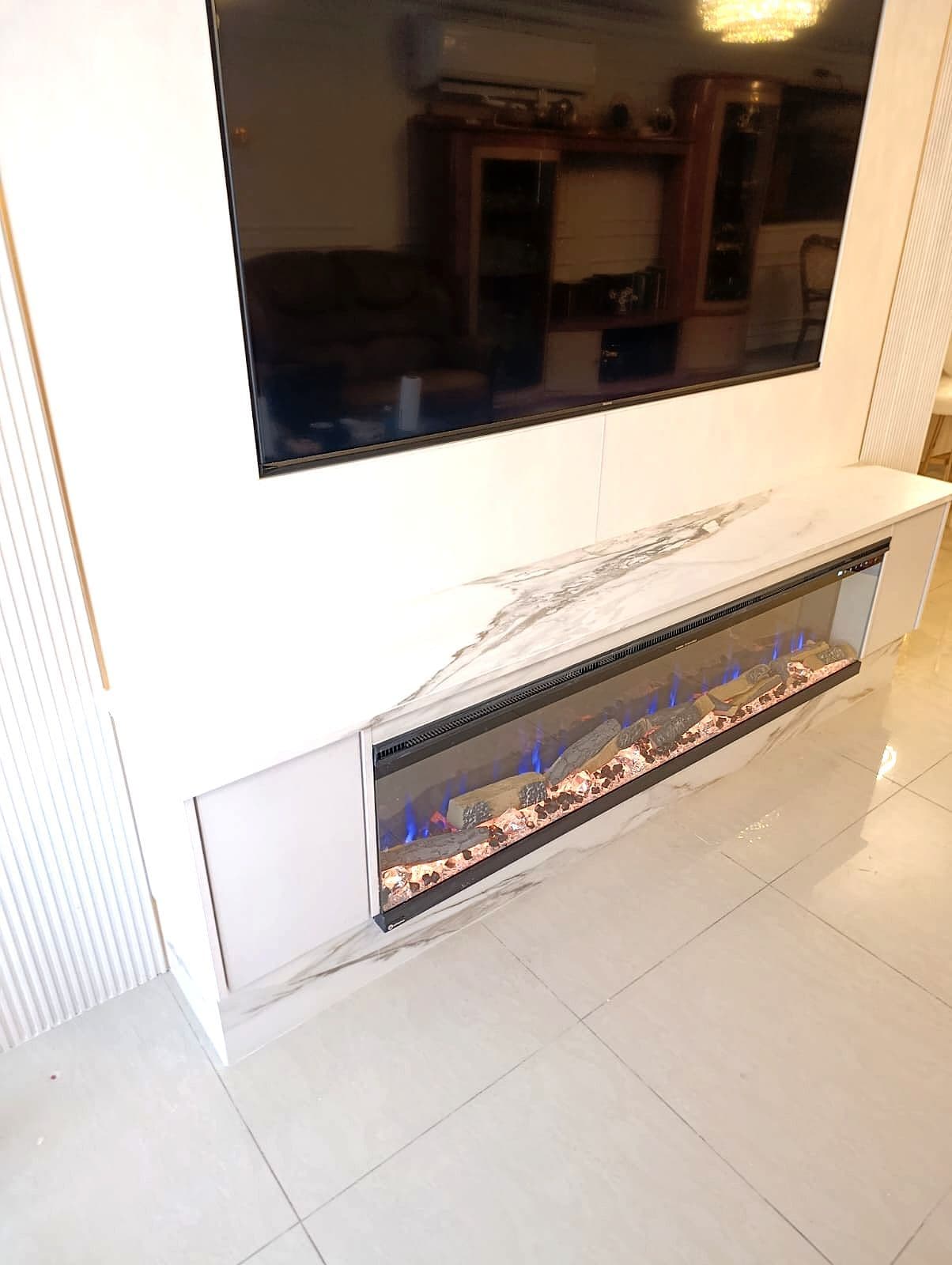
The three materials look similar in a catalog and behave completely differently in a kitchen. An honest guide to the differences that actually matter.
The fundamental difference: where it comes from
Natural marble is quarried from the mountain. That means every slab is the product of a geological process millions of years long, and no two slabs are identical. The veins are not a print but real minerals running through the depth of the stone.
Engineered quartz is manufactured from natural quartz grains bound with polymer resin and pigments. The result is completely uniform — a huge advantage when you need consistency across a whole kitchen, and a drawback for anyone chasing the uniqueness of natural stone.
Porcelain is, in effect, ceramic: clay and mineral powders pressed and fired above 1,200°C. The slab comes out almost entirely dense, and therefore absorbs almost no liquid.
What happens when lemon spills
This is the test that separates the materials. Natural marble is calcite based, and calcite reacts with acid. A drop of lemon or wine left on an unsealed marble surface will leave a dull etch — not dirt, but a change in the stone's surface itself. The answer is periodic sealing and the discipline of wiping spills immediately.
Quartz and porcelain simply do not react. You can leave a cut lemon on the surface overnight and wipe it away in the morning with no trace. If your kitchen sees a lot of cooking, has children, or you simply know you will not wipe immediately — this is the main reason to choose one of them.
Heat, scratches and weight
Porcelain is the outright winner on heat — you can put a pan straight from the flame on it. Quartz is actually the most heat-sensitive material, because its resin can yellow or crack under thermal shock, so always use a trivet. Natural marble and granite tolerate reasonable heat but can crack under sharp thermal shock.
On scratches, granite and porcelain lead by a wide margin. Natural marble is relatively soft and will accumulate micro-scratches over the years — some people read that as patina, others as damage. It is worth being honest with yourself before choosing.
So what should you choose?
There is no single answer. A show kitchen in a home where little cooking happens — natural marble, without hesitation. A family kitchen that works hard — quartz or porcelain. Want the Calacatta look with porcelain durability? Today's porcelain slabs reproduce it with impressive accuracy. Come to the gallery, touch all three, and decide with your hand rather than only with your eye.